Robot Vacuum UAHRC18: What 20,000Pa and a 4L Dock Change
Robot Vacuum UAHRC18: What 20,000Pa and a 4L Dock Change
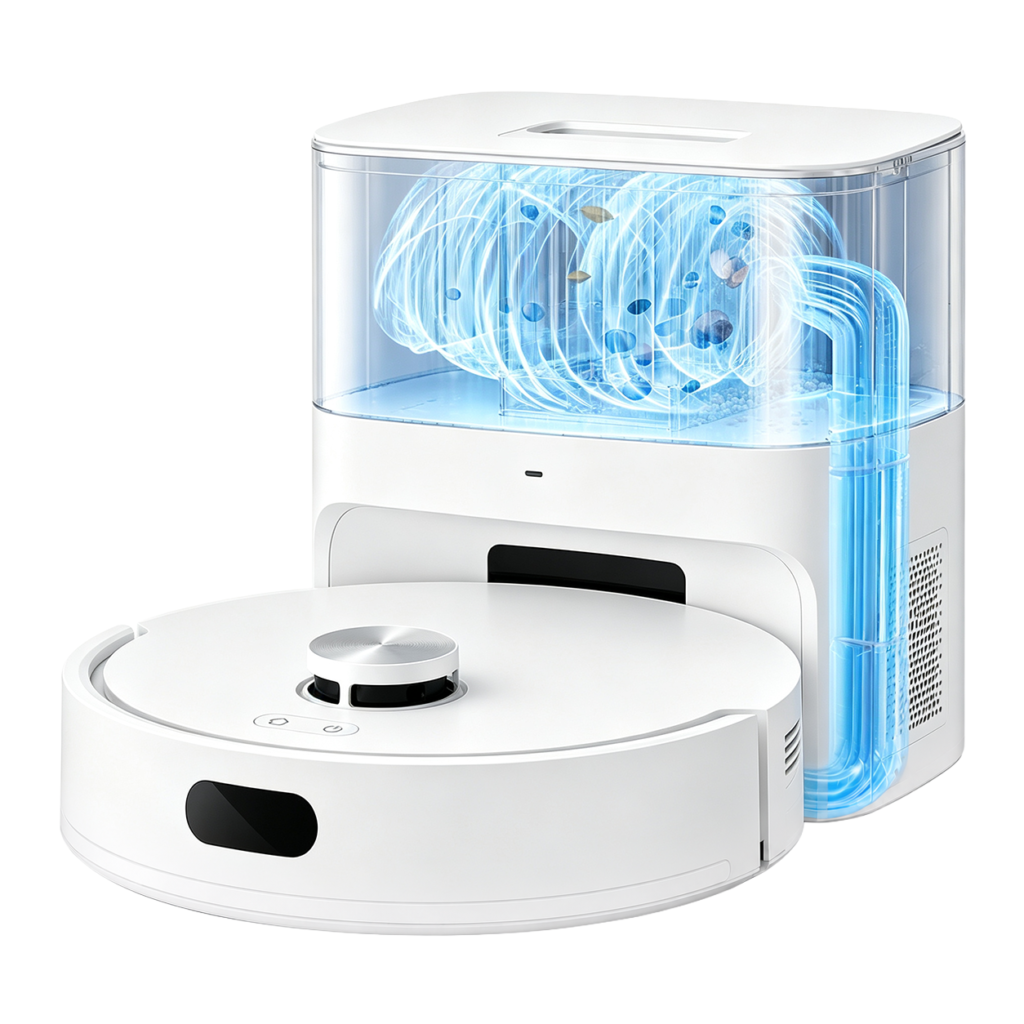
A 500-unit order starts at the catalogued $138.52 per unit, so a buyer needs more than a 20,000Pa headline. A robot vacuum is a self-propelled floor-cleaning appliance; UAHRC18 adds a 45W vacuum-and-mop, laser navigation, a 4L auto-empty bag, 350mL combined water tank, app/keypad control and automatic recharge. This guide turns those facts into an RFQ and acceptance plan.
// 01 — Key takeaways
Founded in 2005, Guilin Use at Home Technology Co., LTD operates a documented 15,000 m² factory with 205 workers. See the factory Trust Center.
The listed suction-pressure value must be read with a controlled debris-removal method.
Automatic dust-collection bag capacity at the charging base.
Battery capacity paired with a listed 4.5-hour charging time.
The fetched product record lists this as the custom-order MOQ.
// 02 — Decision
What should a robot vacuum buyer decide first?
Choose the retail job before choosing the headline feature. UAHRC18 can lead with mapped coverage, high listed suction, lower-touch dust handling or combined vacuuming and mopping. A buyer should select one primary promise, define the target floor mix and make the remaining features supporting points in the range plan.
Define one shelf promise
Hard-floor homes favor route coverage and fine-debris pickup. Mixed floors add carpet transitions and brush behavior. Pet-heavy homes put more weight on hair handling and dock transfer. Each workload needs its own demonstration rather than one broad “whole-home” claim.
Use a claim-to-test checklist
| Proposed claim | Method to name | Outcome to record |
|---|---|---|
| Mapped coverage | Fixed furnished layout, unchanged start point | Accessible area reached, missed zones, dock return |
| Debris pickup | Named debris mass, floor type, brush and suction mode | Collected mass, residue and brush winding |
| Auto-empty handling | Repeated transfers with target dust and fibres | Bin residue, seal dust and blockages |
| Mopping | Named floor, fill level, flow setting and route | Water distribution, leakage and pad condition |
The IEC/ASTM 62885-7 performance-method standard describes measurements for dry-cleaning robots, including debris removal on hard floors and carpets, fibre removal and energy use. It supplies methods rather than a universal pass mark, so the buyer’s brief must set release limits.
A catalogue number earns attention; a repeatable test earns a purchase order.
— Mi Lan, Founder, Guilin Use at Home Technology Co., LTD
// 03 — Specifications
What do UAHRC18’s 20,000Pa and 45W mean?
The approximate 20,000Pa figure describes listed suction pressure, while 45W is rated electrical power. Neither value alone states debris pickup, airflow, runtime or edge reach. Treat both as system inputs, then judge the production configuration by collected debris, route completion, dock behavior and water control.
Evidence boundary: the fetched catalogue supplies the values in this guide but no dated UAHRC18 production or QA observation. It also omits runtime, noise, cleaned area, app protocol, battery chemistry and the unit for 325×325×93. This article therefore reports no measured performance result and does not infer those fields.
UAHRC18 specification sheet
Rev. 2026.08
| Specification | UAHRC18 catalogue value | Buying relevance |
|---|---|---|
| Rated power | 45W | Identifies the listed electrical input |
| Suction power | Approx. 20,000Pa | Sets the pressure claim for the floor trial |
| Combined water tank | Approx. 350mL | Frames refill and water-distribution work |
| Dust bag | 4L | Frames dock consumables and transfer work |
| Charging time | 4.5 hours | Sets a charging-schedule input |
| Battery capacity | 3000mAh | Identifies the listed pack capacity |
| Control | APP/Keypad | Calls for local and connected-flow review |
| Product size | 325×325×93 | Requires a unit in the signed specification |
Pressure is not pickup
Pickup also depends on airflow, inlet geometry, brush contact, seals, floor texture and mode. A useful report names the floor, debris, brush, filter condition and setting, then weighs residue rather than treating Pa as a cleaning score.
Battery capacity is not runtime
The 3000mAh figure identifies capacity. Runtime varies with suction mode, mopping, floor resistance, route length and return-to-base behavior, so operating duration belongs to the same fixed-layout trial used for coverage.
Capacity figures shape service work
The 4L bag affects consumable planning; the 350mL combined tank affects refill planning; and 4.5 hours affects the charging schedule. These values guide test design without promising days of bag service or square metres per fill.
// 04 — Comparison
How does UAHRC18 compare with two fetched laser models?
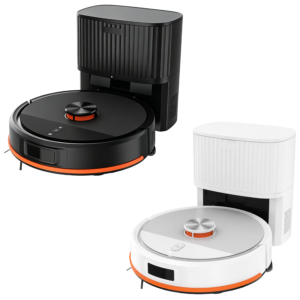
UAHRC18 is the higher-priced, higher-suction listed configuration in this three-model set and is the only row with a 4L automatic dust bag. UAHRC01 and UAHRC02 carry lower suction ranges. Their price floors occur at different quantities, so the matrix shows assortment architecture rather than like-for-like quotations.
| Model | Power | Listed suction | Configuration | Lowest fetched tier |
|---|---|---|---|---|
| UAHRC18 | 45W | Approx. 20,000Pa | Laser navigation, mop, 4L auto dust collection | $134.36/unit at 3,000 |
| UAHRC02 | 50W | 0.9/1.2/2.7Kpa | Laser mapping, sweep/suction/mop, dust collector | $88.00/unit at 10,000 |
| UAHRC01 | 50W | 0.9/1.2/2.7Kpa | Laser mapping, sweep/suction/mop, charging dock | $91.64/unit at 10,000 |
Read the quantity bases first
UAHRC18 reaches its displayed floor at 3,000 units; both sibling floors use 10,000. Dock functions, accessory sets and packaging also differ. Reprice the same quantity and written deliverables before using the last column for a margin decision.
Use the rows as three range positions
UAHRC18 supports a feature-led position around laser navigation, approximate 20,000Pa suction and 4L base collection. UAHRC01 and UAHRC02 provide lower-priced laser alternatives. Retail names should follow demonstrated functions, not pressure figures alone.
// 05 — Navigation
When does laser navigation justify the shortlist?
Laser navigation earns a shortlist place when the robot maps the intended layout, covers rooms methodically, handles named obstacles and returns to its base without routine rescue. UAHRC18 lists laser intelligent navigation and path planning, so the buyer’s acceptance layout should make those route behaviors observable.
Map coverage and recovery
- Mark the accessible floor area and keep the start point fixed.
- Record first-map completion, repeat-route consistency and missed zones.
- Move one obstacle, then record recovery and successful base return.
- Keep suction mode constant while comparing navigation runs.
Separate mapping from object handling
Laser distance mapping can work without bright ambient light, but that does not establish small-object recognition. Include cables, reflective furniture, dark edges, low overhangs and tight chair legs, then log contacts, stalls and rescues separately from map completion.
Review the connected-product file
Demonstrate onboarding, keypad commands, path display, cleaning commands, return to charge, reset, account handling and updates. NIST IR 8425 offers a consumer-IoT baseline for device identity, configuration, data protection, interface access, software updates, security-state awareness and documentation.
// 06 — Dock and mop
What makes the 4L dock and mop useful?
The dock is useful when it transfers debris reliably and replacement bags fit the channel’s service plan. The mop is useful when water flow suits the stated floor type without leakage or uneven wetting. Capacity alone cannot answer either question, so test the two systems as separate workflows.
Dock-transfer acceptance checklist
- Weigh or inspect debris left in the robot bin after each transfer.
- Record dust at seals, bag seating, blockages and transfer noise.
- Include fine dust and long fibres from the target market.
- Repeat enough cycles to expose a recurring transfer fault.
Mopping acceptance checklist
- Name the floor material, fill level, water setting and pad.
- Record wetting pattern, leakage, streaking and pad condition.
- Inspect transitions and the route back to the charging base.
Accessory schedule
The fetched package lists a dust-collection charging base, adapter, instruction manual, roller brush, mop pad and bristle brush. The order schedule should add a count, plug, manual language, color, barcode and replacement-bag reference for each market.
// 07 — Evidence and PO
Which evidence and PO fields belong together?
Connect each retail claim to its method, result field and order annex. Keep appliance safety, cleaning performance, battery transport, connected-product support and commercial scope as separate records. A certificate name cannot replace a floor result, while a clean route cannot establish destination compliance or shipping readiness.
Evidence reference table
| Track | Reference or file | What the PO should identify |
|---|---|---|
| Appliance safety | IEC 60335-2-2:2026 and the destination adoption | Model, market, voltage scope and applicable report |
| Robot performance | IEC/ASTM 62885-7 method | Floor, debris, mode, layout and result format |
| Battery transport | UNECE Manual of Tests and Criteria, subsection 38.3 | Cell and pack identity when the supplied chemistry and route require it |
| Connected support | App, firmware and support file | Package version, update owner, account flow and escalation route |
Acceptance and PO schedule
| Annex | Lock in the order | Record at acceptance |
|---|---|---|
| Identity | UAHRC18, specification revision, firmware and app package | Labels and version identifiers |
| Functions | Navigation, suction mode, brush, dock transfer and water flow | Results from the named layout and methods |
| Pack-out | Accessory counts, plug, language, color, barcode and consumables | Sampled counts and markings |
| After-sales | 12-month warranty route, spare-parts list and app support owner | Contacts, response path and supplied parts |
// 08 — Commercials
What do the price tiers and custom MOQ change?
They separate standard catalogue pricing from a customized program. UAHRC18 has four fetched USD unit-price tiers from 500 through 3,000 units, while the packaging record lists 1,000 units as the custom MOQ. The 500-unit row therefore supplies a price point, not a promise of custom work.
Exact fetched UAHRC18 price breaks
| Quantity | Catalogued unit price | Catalogued reduction per unit |
|---|---|---|
| 500 | $138.52 | $0.00 |
| 1,000 | $137.13 | $1.39 |
| 2,000 | $135.75 | $2.77 |
| 3,000 | $134.36 | $4.16 |
Define the 1,000-unit custom scope
List logo, color, packaging, manual, app branding and any engineering work as separate deliverables. This prevents the general “custom” label from being read as unlimited change and gives each item an owner and revision.
Put open quote fields on one page
- Quote validity, currency, included configuration and trade term.
- Lead time, port, payment schedule and customization charges.
- Tooling ownership, spare-parts prices and replacement-bag supply.
// 09 — Assortment fit
Who should shortlist robot vacuum UAHRC18?
Shortlist UAHRC18 for a channel that can support a laser-navigation vacuum-and-mop, an app/keypad interface, a dust-collection base and replacement consumables. It suits a feature-led range position when the buyer also has a defined floor trial, connected-support owner and room for the 1,000-unit custom MOQ.
Channel-fit snapshot
| Shortlist when | Hold the listing when |
|---|---|
| Mapped routes and base collection are central to the offer | The channel cannot support app setup or consumables |
| The range needs a higher-suction position above UAHRC01/02 | The listing depends on an untested runtime, noise or area claim |
| The buyer can define artwork and pack-out at custom MOQ | The launch needs undefined customization below 1,000 units |
Range position
Place UAHRC18 above simpler laser models only when its dock, suction position and support package create a visible customer difference. The matrix gives the commercial starting point; the acceptance schedule supplies the release decision.
// 10 — Manufacturing
How we manufacture and control UAHRC18 orders
Guilin Use at Home Technology Co., LTD combines product engineering, assembly, line testing and packing for OEM and private-label programs. The UAHRC18 order file should connect mechanical revision, motor and air path, PCBA and firmware, dock transfer, water system, market file and warranty route.
Tooling and molding control
Lock housings, interfaces, brush access, tank fit, dock alignment, material specification, color reference and logo area before cosmetic variants move forward.
Motor, PCBA and charging checks
Identify the production motor, firmware and app package, then inspect keypad response, charging logic, app connection and automatic-recharge behavior against the order revision.
Quality control and functional testing
Cover suction mode, brush rotation, route start, base return, dust transfer, tank fit, water leakage and listed accessories under the methods in the acceptance annex.
Certifications and 12-month warranty
The Trust Center names certification families including CE and RoHS; the applicable UAHRC18 market file belongs with the order. Write the 12-month warranty route into the sales documents.
// 11 — FAQ
What do buyers ask before ordering UAHRC18?
Buyers usually need three boundary questions settled before artwork: what the lower price tier buys, which local controls work without the app and whether the dimensions carry a stated unit. These answers distinguish a listed fact from a field that belongs in the signed order file.
Does the 500-unit UAHRC18 tier include customization?
No. The fetched data lists $138.52 per unit at 500 units and a separate custom MOQ of 1,000 units. The quotation should name each custom deliverable—such as logo, color, packaging, manual or app work—because the price row alone does not define or include that scope.
Can UAHRC18 be controlled without its app?
The product record lists APP/Keypad control, which establishes that both interfaces exist, but it does not enumerate the keypad’s offline commands. Demonstrate start, pause, mode selection, dock return, reset and recovery without an account, then put the supported local functions in the manual and support script.
Is the UAHRC18 size 325×325×93 millimetres?
The fetched product record gives 325×325×93 but does not state a unit, so this article does not label the dimensions as millimetres. Put the unit and measurement orientation in the signed specification, carton artwork and marketplace data before using the size in a listing or logistics calculation.
// 12 — Conclusion
What is the next decision on UAHRC18?
Move UAHRC18 from shortlist to sample only when its mapped-cleaning role, dock workflow, app support and custom scope fit the channel. The next deliverable is a model-locked acceptance annex with named floors, debris, route, transfer, water and pack-out fields—not another unqualified suction comparison.
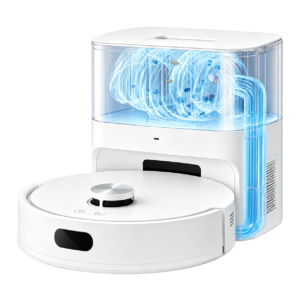
Featured model
UAHRC18 laser-navigation robot vacuum and mop
45W · approx. 20,000Pa · 4L dust bag · approx. 350mL tank · 3000mAh
From $134.36/unit at the catalogued 3,000-unit tier
Similar robot vacuum products
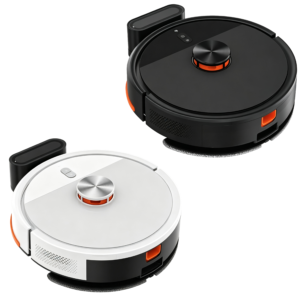
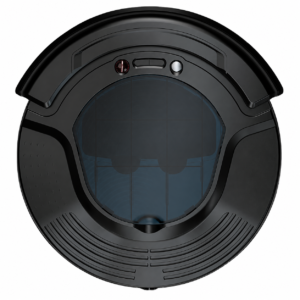
These five live catalogue pages provide alternative navigation, control and form-factor positions. Use a directly fetched record before adding any numerical sibling claim to an RFQ.
Ready to order or need a wholesale quote?
Vacuum Cleaners China manufactures these appliances direct from our Guilin, China factory — OEM, private-label and B2B welcome. Tell us your market and volume.