Cordless Wet Dry Vacuum: The B2B Buyer’s Guide

Cordless Wet Dry Vacuum: The B2B Buyer’s Guide
Get the spec wrong at 500 units and you eat the returns, not the buyer. A cordless wet dry vacuum is a floor machine that vacuums debris and mops with clean water in one pass, keeping the dirty water in a separate tank — and this guide sizes suction, runtime and tank against three real factory models so you order the right unit the first time.
// 01 — Key takeaways
Rated suction on the featured UAH010LXX — upper-mid band, enough to lift stuck grit from tile and vinyl in one pass.
Runtime per charge from the 2,500 mAh battery — roughly one 3-to-4-bedroom home per session.
Clean-water tank, with a separate 720 ml dirty tank so used water never recirculates.
Minimum order for this model; trial samples ship in 3–7 days.
Warranty on every unit. We are the factory — CE, RoHS and FCC built to export standard.
What is a cordless wet dry vacuum?
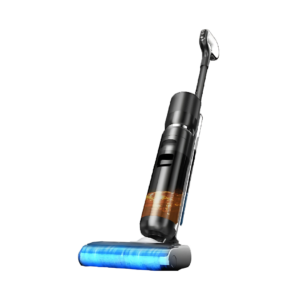
A cordless wet dry vacuum is a battery-powered upright that combines three jobs — vacuuming, mopping and washing — into one head. A spinning roller wets and scrubs the floor while suction lifts the loosened dirt into a dirty-water tank, kept apart from the clean-water tank by a solid-liquid separation system. It replaces a vacuum plus a mop and bucket.
For a distributor, this is the fast-growing slice of the floor-care category. Buyers no longer want a dry stick vacuum and a separate spin mop; they want one pass. The featured UAH010LXX is a representative mid-range unit: 200W motor, 16,000 Pa suction, 800 ml clean and 720 ml dirty tanks, and a self-cleaning cycle. It targets sealed hard floors — tile, wood, laminate and vinyl — which is where the volume sits.
Wet dry vs dry-only stick vacuums
A dry-only stick vacuum pulls dust into a bin and stops there; spills and sticky residue still need a mop. A wet dry unit adds a clean-water feed and a scrubbing roller, so it lifts a dried juice spill or muddy paw prints in the same pass it collects crumbs. The trade-off is weight and maintenance: a wet unit carries water and needs its roller rinsed and dried after use.
Why solid-liquid separation matters
The separation system is the core hygiene claim. Clean water sprays down, dirty water and debris get sucked up into a distinct tank, and the two never mix. Without it, a machine would push dirty water back onto the floor. On this model the split is 800 ml clean to 720 ml dirty — a near-matched pair, so the dirty tank rarely fills before the clean tank empties.
How much suction do you actually need?
For the sealed hard floors these machines target, 8,000 Pa and above clears daily grit and liquid in one pass; premium consumer units run 20,000 to 23,000 Pa. At 16,000 Pa the UAH010LXX sits in the upper-mid band — strong enough for stuck-on debris on tile and vinyl without the cost of a top-tier motor. Extreme suction pays off on deep-pile carpet, not on the hard floors this unit is built for.
Suction is measured in pascals (Pa). Entry-level wet dry units hover around 10,000 to 15,000 Pa; premium models push 20,000 to 25,000 Pa. But raw Pa is only half the story: roller design, edge coverage and water delivery decide real-world pickup as much as the headline number. A buyer who chases the biggest Pa figure alone often overpays for suction the target floor never needs.
Buyers ask for the highest Pa on the datasheet, then clean tile with it. On sealed hard floors, roller contact and edge reach decide the result far more than the last few thousand pascals.
— Mi Lan, Founder, Guilin Use at Home Technology Co., LTD
Independent test methods exist for this. Vacuum-cleaner performance is measured under IEC 60312, the international standard for household vacuum performance. Because a cordless wet dry vacuum sprays water, the electrical enclosure also needs a splash rating under the IEC 60529 IP system — look for IPX4 or better on any wet floor machine.
Suction rating vs real pickup
A Pa figure is sealed suction measured at a blocked port; it is not airflow across an open floor. Two units can share a 16,000 Pa rating yet pick up differently because roller contact, nozzle seal and airflow path diverge. When you evaluate a cordless wet dry vacuum, treat Pa as one input and ask for a pickup demo on the floor type your market uses most.
Edge reach and roller contact
Most wet dry vacuum heads leave a gap of roughly half an inch along baseboards. One-side edge cleaning, which this model carries, closes that gap on the working side so the roller reaches flush to the wall. A powered-traction head also keeps the roller pressed into the floor, which does more for stuck grime than a few thousand extra pascals of headline suction.
UAH010LXX spec sheet
The featured model pairs a 200W motor with 16,000 Pa suction, a 2,500 mAh battery good for 40 minutes, and an 800 ml clean plus 720 ml dirty tank. It runs on 110 to 220V, weighs 4 kg, and operates at a low 78 dB. Every figure below is a real catalog value for this unit, not an estimate.
UAH010LXX spec sheet
Rev. 2026.07
| Spec | This model | Why it matters |
| Rated power | 200 W | Drives the roller and suction on hard floors and thin mats. |
| Suction | 16,000 Pa | Upper-mid band; clears stuck grit in one pass. |
| Battery | 2,500 mAh | Balances runtime against a lighter 4 kg body. |
| Runtime | 40 minutes | Covers a 3–4-bedroom home per charge. |
| Charge time | 3–3.5 hours | Full recharge overnight or between shifts. |
| Clean / dirty tank | 800 ml / 720 ml | Matched pair; dirty tank rarely fills first. |
| Voltage | 110–220 V | One board covers most export markets. |
| Noise | 78 dB | Usable in occupied rooms and hospitality settings. |
| Weight | 4 kg | Light enough for stair carries and older users. |
| Housing | ABS | Durable, easy to mould for OEM colorways. |
Comparing our three wet dry models
Across our catalog, three units cover the mainstream price bands. The 170W UAH08L is the light entry unit, the 200W UAH010LXX is the balanced mid-range with the biggest clean tank, and the 250W UAH015L is the high-suction option with the largest battery. Every price and spec below is a real, currently-listed catalog figure.
| Model | Power | Suction | Battery | Runtime | Clean tank | From $/unit |
|---|---|---|---|---|---|---|
| UAH08L | 170 W | 12,000 Pa | 2,500 mAh | 30 min | 620 ml | $130 |
| UAH010LXX Balanced | 200 W | 16,000 Pa | 2,500 mAh | 40 min | 800 ml | $140 |
| UAH015L | 250 W | 18,000 Pa | 4,400 mAh | 25–50 min | 600 ml | $107 |
The pricing is not a straight ladder, and that surprises buyers. The 250W UAH015L lists from $107/unit at its top tier — below both other models — because it runs a smaller tank and a simpler feature set around a bigger motor and battery. The UAH010LXX sits at from $140/unit and earns it with the largest 800 ml clean tank and a matched dirty tank. Pick by the job: biggest tank and balanced power (UAH010LXX), highest suction and longest possible runtime (UAH015L), or lowest entry weight at 3.5 kg (UAH08L).
Sizing runtime and tank for the end user
Match runtime to the floor area your buyer’s customers actually clean. Forty minutes and an 800 ml tank suit a family home cleaned in one session; a cleaning contractor doing back-to-back jobs needs the 250W unit’s larger 4,400 mAh battery. Undersize the battery for the use case and you get returns; oversize it and you add weight and cost the market will not pay for.
Tank size sets how far the machine goes before a refill. An 800 ml clean tank covers a typical apartment floor in one fill; smaller 600 ml tanks force a mid-clean top-up on larger homes. Weigh that against carry weight — more water means a heavier upright. The UAH010LXX’s 4 kg with the biggest tank in the range is the sweet spot for residential resale.
Battery capacity and charge cycles
The 2,500 mAh pack in this cordless wet dry vacuum is sized to hold 40 usable minutes while keeping the body at 4 kg. A larger cell, like the 4,400 mAh unit in the 250W model, buys runtime at the cost of weight and charge time. For a residential SKU that argument usually lands on the lighter pack; for a commercial contract, the bigger cell wins.
Matching the unit to the end user
Sell this into homes and light hospitality, not industrial sites. A cordless wet dry vacuum with a 40-minute charge and a 4 kg frame suits apartments, family homes, cafes and small retail floors. Warehouses and factory floors need corded or high-capacity machines outside this class. Positioning the SKU correctly at the point of sale is what keeps your return rate low.
How we manufacture
Every cordless wet dry vacuum we sell is designed, moulded, assembled and tested in our own 15,000 m² facility in Guilin, China, in operation since 2005 — not bought in and rebadged. The four steps below run in-house, from tooling through final compliance sign-off, so we control quality and can customize for OEM programs at the source.
In-house tooling & molding
ABS housings are moulded on our own tooling, so OEM colorways, logos and packaging changes happen at the source rather than through a third party. This is where a private-label program starts.
Motor & battery burn-in
The 200W motor and 2,500 mAh lithium pack are run under load before assembly to catch early failures. The cell is tested to the UN 38.3 transport regime, mandatory for shipping lithium by air, sea, rail or road.
Suction & seal integrity test
Each unit is checked for rated suction and for a leak-free split between the clean and dirty tanks. The solid-liquid separation seal is the part that decides whether the machine stays hygienic, so it is tested, not assumed.
Compliance & warranty
Export units are built to CE, RoHS and FCC, with UKCA, PSE and SAA available by destination market. Every unit ships with a 12-month warranty. We name only the marks we actually build to and supply the reports for your order.
B2B sourcing: MOQ, lead time and shipping
MOQ on this cordless wet dry vacuum is 100 units, with trial samples in 3 to 7 days and bulk production in 15 to 30 days after deposit. We ship worldwide FOB China on 30/70 T/T terms, Alibaba Trade Assurance supported. A single 110 to 220V board means one SKU covers most markets, so you are not managing regional variants.
Best for distributors, hospitality and private label
This unit fits three buyer profiles. Distributors and retailers get a balanced mid-range SKU with the biggest tank in its class as a hero model. Hospitality and facility buyers get a light 4 kg upright quiet enough at 78 dB for occupied floors. Private-label brands get a stock platform we customize on logo, color, packaging and plug — your brand, our factory.
Volume pricing tiers
Pricing steps down with quantity. Every figure here is a live catalog tier for the UAH010LXX, quoted per unit — a buyer can hold us to these.
| Quantity | Price / unit | Discount |
|---|---|---|
| 100 units (MOQ) | $145.00 | — |
| 500 units | $143.00 | 2% |
| 700 units | $142.00 | 3% |
| 1,000 units | $140.00 | 5% |
Sea freight is the default for container loads and cuts logistics cost sharply against air. The export carton for this model is a single unit at 6.3 kg, 31.5 × 29.5 × 68 cm — figures you need to calculate container fill and landed cost before you commit.
Lithium-battery shipping & compliance
Because these units carry a lithium battery, the cell must pass the UN 38.3 transport test regime — eight tests covering altitude, thermal cycling, vibration, shock and short circuit — before it can legally move by any mode. For destination-market safety and EMC, we build to CE, RoHS and FCC, with regional marks like UKCA, PSE and SAA added per order.
Ask any supplier for the UN 38.3 test summary and the CE/RoHS declarations before you ship — a battery that has not passed can only move under restrictive low-production rules. We supply the certificates and test reports relevant to your specific order in plain document form; we do not attach generic PDFs to a web page.
Keeping the machine hygienic in service
Run the self-clean cycle after every use: it flushes the roller and internal tubing with fresh water and drains it into the dirty tank, clearing trapped hair and residue that would otherwise smell. Empty the 720 ml dirty tank, rinse it, and let the roller air-dry. Skipping the dry step is the single most common cause of odor complaints.
For your after-sales team, most field issues on wet dry units trace to two things: a roller left wet between uses, and a clogged dirty-tank filter. Both are user-maintenance, not defects — a one-page care sheet in the box cuts avoidable returns. We include one and localize it for OEM orders.
Featured product
// Model UAH010LXX
Cordless Wet Dry Vacuum Cleaner, 200W, 16000Pa, 800ml Tank
200W · 16,000 Pa · 40-min runtime · 800 ml clean / 720 ml dirty tank · self-cleaning · 4 kg
Factory-direct from $140/unit
Similar products
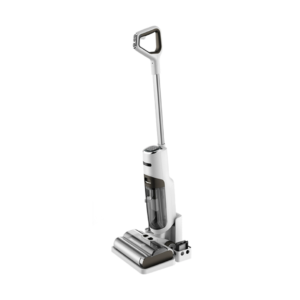
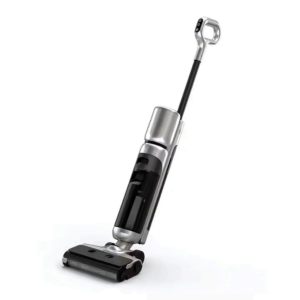
Беспроводной пылесос, 200 Вт, 17000 Па, с функцией влажной уборки и мытья
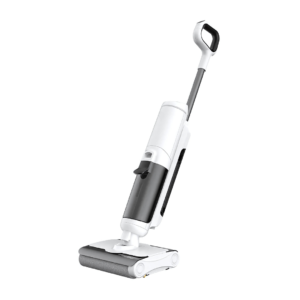
Odkurzacz na mokro i sucho, 250W, 16000Pa, podwójny wałek
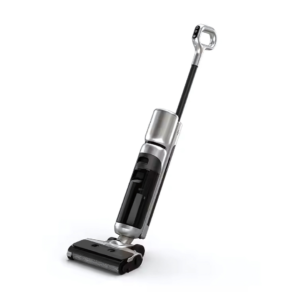
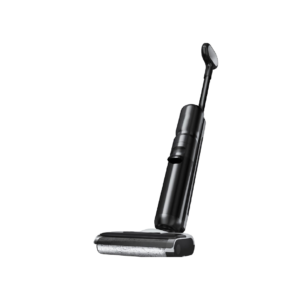
Aspirateur eau et poussière, 170W, 12000Pa, autonettoyant
Frequently asked questions
How much suction does a wet dry vacuum need for hard floors and low-pile carpet?
What is the runtime and charge time on the 200W, 16000Pa model?
What is the MOQ, lead time and warranty for wholesale orders?
Do you offer OEM and private-label customization?
How does the self-cleaning cycle work, and does it prevent odor?
Which certifications and lithium-battery shipping approvals apply?
Conclusion: matching the model to the order
The right cordless wet dry vacuum is the one matched to your buyer’s floors and volume, not the one with the biggest Pa figure. The UAH010LXX at 200W and 16,000 Pa, with the largest 800 ml tank in our range, is the balanced choice for residential resale; step to the 250W UAH015L for suction and battery, or the 170W UAH08L for the lightest entry unit.
All three are built, tested and shipped from our own Guilin factory with a 12-month warranty and full OEM support. Tell us your market, target price and volume, and we will quote the model that fits — and supply the compliance documents your import needs.
Ready to order or need a wholesale quote?
Vacuum Cleaners China manufactures these appliances direct from our Guilin, China factory — OEM, private-label and B2B welcome. Tell us your market and volume.