UAHRC05 Robot Vacuum: 7 Tests Before a Wholesale Order
UAHRC05 Robot Vacuum: 7 Tests Before a Wholesale Order
A $56.20 catalog tier still leaves seven performance questions unanswered. The UAHRC05 robot vacuum is a 26W, three-in-one floor robot with four listed suction levels up to 2.7 kPa, Wi-Fi control, flat mopping and infrared dock return. This buyer guide is a pre-order test protocol, not a report of completed UAHRC05 trials.
// 01 — Key takeaways
Guilin Use at Home Technology Co., LTD was founded in 2005. Its Trust Center records the factory credentials behind this procurement protocol.
The release matrix covers pickup, route, sensors, dock, app, mop and packing.
The catalog lists 0.5, 0.9, 1.8 and 2.7 kPa settings; pickup remains the buying result.
Each catalog duration needs its operating mode and floor conditions.
Standard and custom MOQs do not match the 1,200- and 2,400-unit discounted tiers.
// 02 — Test matrix
Which 7 tests should a wholesale buyer run?
A UAHRC05 robot vacuum release should depend on seven recorded outcomes: dry pickup, route coverage, obstacle and edge response, dock return, app behavior, mop-water control and pack reconciliation. The matrix turns catalog features into evidence that can support retail copy, manuals, inspection criteria and after-sales decisions.
| Test | Run this task | Record this evidence |
|---|---|---|
| 1 · Dry pickup | Fixed debris mass on each target floor | Starting mass, remaining mass, passes and mode |
| 2 · Route coverage | Bounded furnished room | Visited zones, repeat tracks, misses and stops |
| 3 · Sensors | Protected obstacle, threshold and edge rig | Contact, recovery, trapping and safe stop |
| 4 · Dock return | Start from several points at known battery state | Return command, dock approach and charge indication |
| 5 · Wi-Fi app | Fresh setup on supported phones | Pairing, commands, scheduling and recovery |
| 6 · Flat mop | Measured fill on an allowed floor panel | Water used, streaks, standing water and dried finish |
| 7 · Packing | Open one sealed retail pack and master carton | Accessory count, weights, dimensions and marks |
Why does the protocol come before retail copy?
Pressure, sensor and app labels describe a configuration; they do not establish pickup, coverage or recovery. One report should name the floor, debris, room, phone, app build, battery state and pass rule. That record gives product-page writers and incoming inspectors the same reference.
Which configuration label needs special attention?
The source record places speaker wake-up and an app path map under “OB16 PRO exclusive features.” Keep that row outside the base UAHRC05 promise unless the ordered hardware and app release include it. The signed schedule should identify the model alias and enabled functions.
What sits outside the seven-test matrix?
Destination conformity, wireless evidence, battery transport papers, artwork and commercial terms need separate files. The seven tests form the performance core. They do not replace the technical file, quote, purchase order or shipment documents for the chosen market.
A defensible robot-vacuum range connects every headline feature to a named method, a recorded outcome and the exact configuration shipped.
— Mi Lan, Founder, Guilin Use at Home Technology Co., LTD
// 03 — Specifications
Which UAHRC05 robot vacuum specifications become test inputs?
Use the 26W maximum, four suction levels, 14.4V/1500mAh battery, three listed runtimes, 335ml dustbin and 100ml tank as test inputs rather than outcomes. The UAHRC05 robot vacuum still needs measured pickup, route coverage, water use and noise under named conditions before those figures support performance language.
UAHRC05 specification sheet
Rev. 2026.08
These entries reproduce the fetched catalog record. The order annex should attach a mode, method and tolerance where a value becomes an inspection criterion.
| Specification | Catalog value | Procurement use |
|---|---|---|
| Navigation | Gyroscope + Pedometer | Route-coverage input |
| Cleaning module | Sweep, vacuum and mop 3-in-1 | Separate dry and wet observations |
| Motor / suction | 26W max; 0.5/0.9/1.8/2.7 kPa | Pair each setting with pickup and time |
| Battery / runtime | 14.4V/1500mAh; ≈100/80/60min | Pair each duration with mode and route |
| Charging | 19V-0.5A; ≈5 hours | Adapter and turnaround plan |
| Containers | 335ml dustbin; 100ml water tank | Emptying and water-use trials |
| Noise | ≤70dB(A) | Name mode, surface and distance |
| Size / weight | 300×300×78mm; 1.768kg net | Clearance, handling and return logistics |
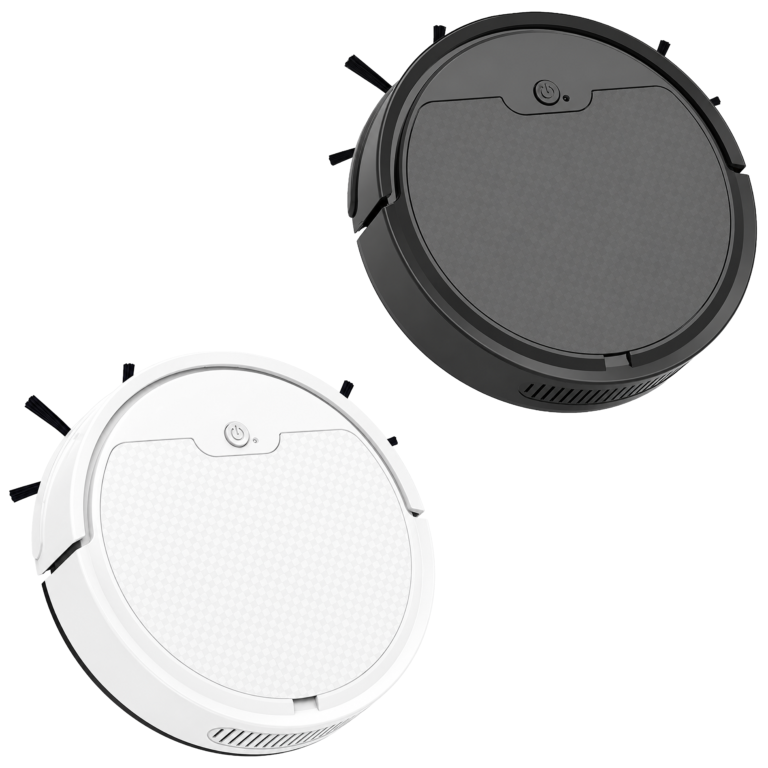
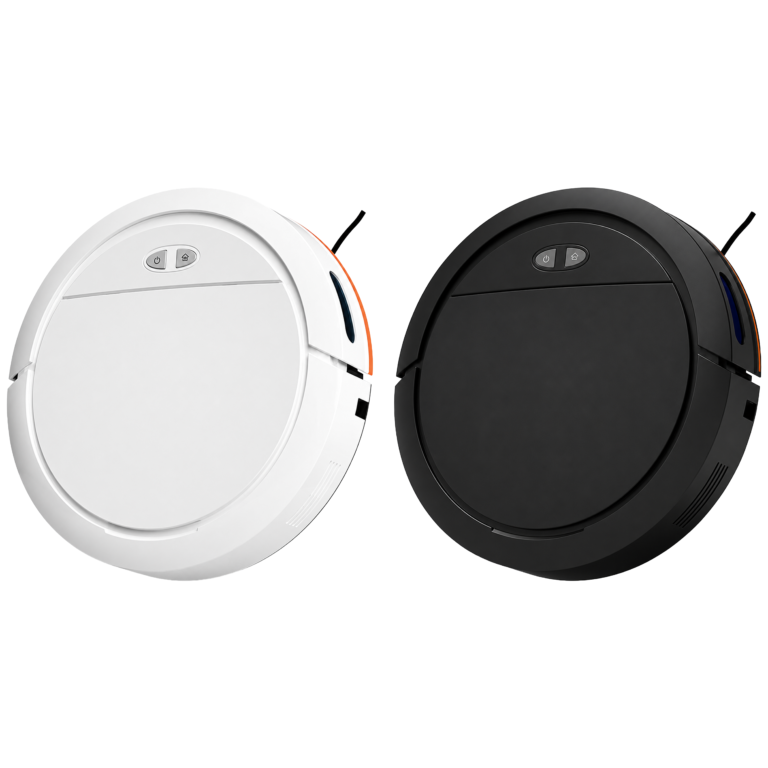
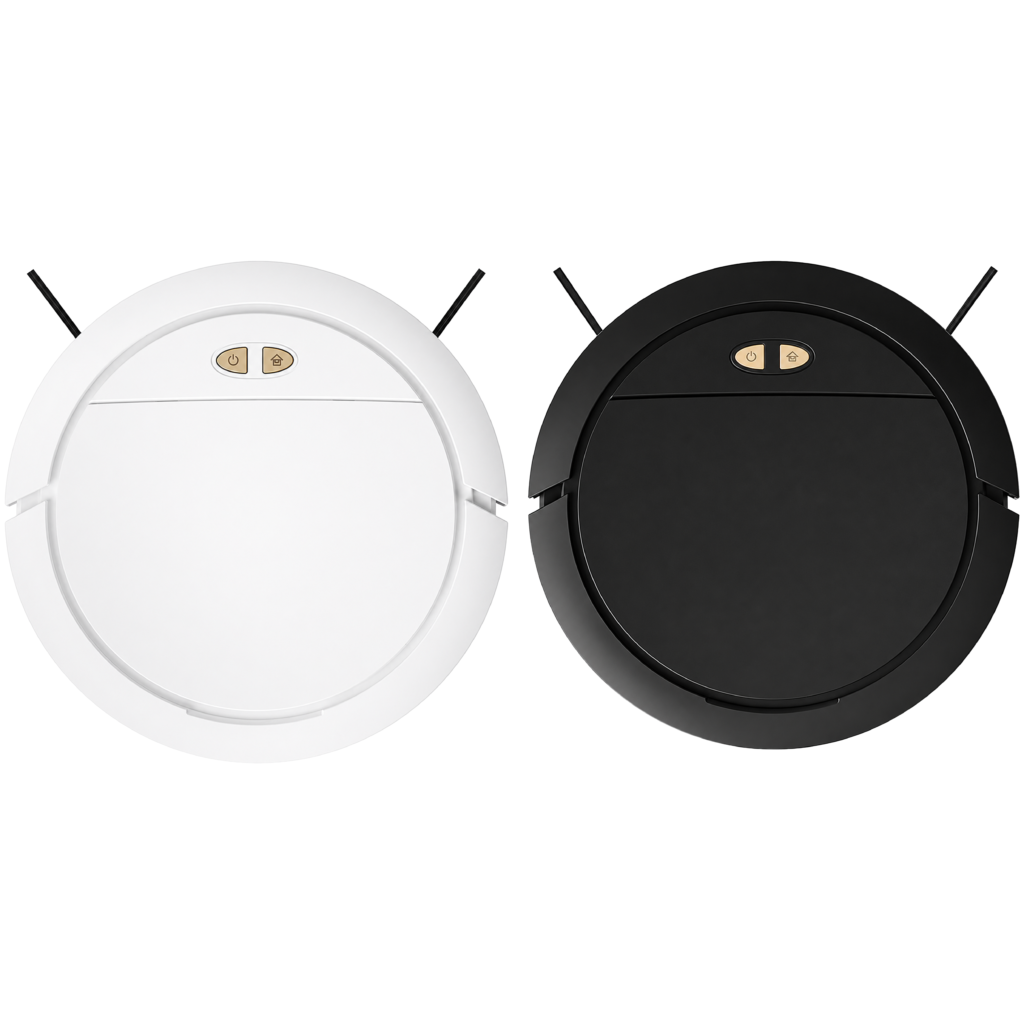
| Colors | White, Black | Range and artwork planning |
How should suction and pickup be paired?
Watts describe input and kilopascals describe pressure; neither equals debris removal. Run 0.5, 0.9, 1.8 and 2.7 kPa with the same floor, debris mass, brush, clean filter, bin load, route and passes. Report remaining debris and elapsed time for each setting.
How should runtime and coverage be paired?
The record does not map 100, 80 and 60 minutes to named modes. Time the same modes used for pickup and mark the room into zones. Record first visits, repeats, missed areas, stops and dock behavior rather than converting elapsed time into an unsupported square-metre claim.
Which standards can structure the technical file?
IEC/ASTM 62885-7 provides performance methods for household dry-cleaning robots; it is not a safety or performance-requirement standard. IEC 60335-2-2:2026 is the current IEC safety edition and includes automatic battery-operated cleaners. The applicable adopted edition, amendments and transition dates depend on the destination market.
// 04 — Model choice
How does the UAHRC05 robot vacuum compare with two fetched models?
Direct SKU records place UAHRC05 between two different propositions. UAHRC07 uses pedometer planning, Bluetooth and USB charging without a listed dock. UAHRC15 uses random navigation, a remote and automatic charging. UAHRC05 adds gyroscope-plus-pedometer navigation, Wi-Fi control, four pressure settings and infrared dock return.
| Model | Navigation / control | Power / suction | Runtime / containers | Lowest listed tier |
|---|---|---|---|---|
| UAHRC05 | Gyroscope + Pedometer; Wi-Fi; dock return | 26W; 0.5/0.9/1.8/2.7 kPa | ≈100/80/60min; 335ml / 100ml | $56.20 at 2,400 |
| UAHRC07 | Pedometer; Bluetooth; USB charging | 8.6W; 1200Pa | ≈80min; 510ml / 135ml | $23.00 at 1,000 |
| UAHRC15 | Random; remote; auto charging | 17W; 300–500Pa | 60min; ≈200ml / mopping pad | $44.60 at 3,000 |
What changes the range position?
Choose architecture before the largest number. UAHRC07 offers larger listed containers at a lower tier. UAHRC15 supports a remote-control proposition. UAHRC05 suits a connected, docked position, but its route, pickup and app outcomes must come from the ordered release rather than a sibling comparison.
What does the comparison price exclude?
The direct records provide unit tiers, not landed costs. Freight, duty, inspection, artwork, app changes, destination work and spare parts have no published amounts here. A quote should place every requested addition on its own line instead of hiding it inside a copied catalog price.
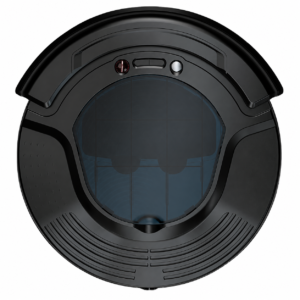
// 05 — Controls
How should buyers test navigation, dock return and Wi-Fi?
Run the UAHRC05 robot vacuum in one bounded, marked room and on one fresh phone setup. The combined protocol should record visited zones, repeat paths, obstacle recovery, edge response, dock approaches, pairing, scheduled starts, commands and recovery after a router or robot restart. This removes repeated tests from the handover plan.
How is the route and dock trial run?
Place representative furniture, thresholds and recoverable obstacles in the room. Start dock-return attempts from several marked points at a known battery state. Log contacts, trapping, missed zones, approach path, contact seating and charge indication. Sensor counts alone do not show successful navigation.
Which app behavior belongs in the brief?
The catalog lists power, scheduling, direction, cleaning mode, strong cleaning, return to charge and ten-language switching. The brief should name the app build, supported phones, network band, account behavior, permissions, update owner and recovery path. Treat the OB16 PRO speaker and path-map row as separate options.
Which market rule can affect the Wi-Fi configuration?
The European Commission’s Radio Equipment Directive overview describes EU safety, electromagnetic-compatibility and spectrum requirements for radio equipment. It is a procurement reference, not evidence for a particular unit. The chosen destination and radio configuration determine the conformity route.
// 06 — Wet system
Can a 100ml tank fit the mopping use case?
A 100ml tank can fit only a defined route and floor. For the UAHRC05 robot vacuum, measure the starting fill, remaining water, area traversed, visible streaks, standing water and dried finish. Keep that result separate from dry pickup, then observe whether a combined run changes brush contact, suction or navigation.
How should mop-water use be measured?
Use an allowed floor panel, the specified cloth and a measured fill. Record water remaining after a fixed route, wet coverage, edge seepage and dry-down time. The catalog states tank capacity but no flow rate, so the report should not turn 100ml into an area claim.
Can the robot mop hardwood floors?
Floor suitability depends on the flooring maker’s moisture instructions and the surface seal. Test a representative panel and inspect it after drying. Avoid naming unsealed or moisture-sensitive wood in sales copy unless the floor supplier’s instructions and the observed finish support that use.
// 07 — Logistics
What do the packing figures mean for an order?
The UAHRC05 robot vacuum packs eight units per listed 540×430×715mm master carton at 25.15kg gross and 0.166023 CBM. The catalog’s 40HQ quantity is lower than its 40ft quantity, so freight planning should retain the source entries and replace them only with a dated packing and loading plan.
UAHRC05 packing record
Catalog values
| Field | Catalog value | Use |
|---|---|---|
| Unit net / gross | 1.768kg / 2.916kg | Handling and freight input |
| Retail pack | 416×131×346mm | Shelf and label layout |
| Master carton | 8 units; 540×430×715mm; 25.15kg | Warehouse plan |
| Volume | 0.166023 CBM | Freight input |
| 20ft / 40ft / 40HQ | 1,344 / 3,792 / 3,272 units | Source entries to reconcile |
Which accessories belong in one retail pack?
The catalog lists one main unit, two brushes, one cloth, one manual, one charging dock, one cleaning brush and one adapter. A sealed-pack inspection should record the count, plug, label and manual revision. Market-specific adapter or language changes belong in the bill of materials.
Which battery document should the shipper request?
UAHRC05 lists a 14.4V/1500mAh battery. The U.S. Department of Transportation’s PHMSA guidance explains the UN 38.3 test-summary requirement for manufacturers and distributors. The shipment file should identify the summary for the exact battery design and shipping configuration.
// 08 — Commercials
How do MOQ and three price tiers shape the order?
The UAHRC05 robot vacuum record sets a 100-unit standard MOQ and a 1,000-unit custom MOQ. Its price rows are $63.00 at one unit, $59.50 at 1,200 and $56.20 at 2,400. Neither MOQ has an exact tier, so the chosen quantity needs its own written unit price.
| Quantity | Discount entry | Unit price | Relation to MOQ |
|---|---|---|---|
| 1 | $0.00 | $63.00 | Below standard MOQ |
| 1,200 | $3.50 | $59.50 | Above custom MOQ |
| 2,400 | $6.80 | $56.20 | Lowest listed tier |
What price applies at either MOQ?
The catalog does not publish one. The quote should state currency, quantity, configuration, unit price, validity and included packing. Custom logo, color split, carton art, manual languages, app work, destination files and spare parts need separate scope instead of an inferred 100- or 1,000-unit price.
Which commercial fields remain open?
No lead time, Incoterm, loading port, payment schedule, inspection charge or destination duty appears in the record. Put each field in the quote and purchase order. If FOB, EXW or CIF is offered, name the selected term, place and current Incoterms edition.
// 09 — Buyer fit
Which buyers should shortlist UAHRC05?
UAHRC05 suits distributors, hotel-supply ranges and private-label programs seeking scheduled floor maintenance, flat mopping, Wi-Fi control and dock return in a 300×300×78mm body. It is a weaker fit when the proposition requires a self-emptying station, demonstrated deep-carpet extraction or app functions outside the released configuration.
When does it fit a distributor range?
Four pressure settings, three runtime entries, two colors and a 100-unit standard MOQ create clear range fields. Position the UAHRC05 robot vacuum around scheduled maintenance only after the seven-test record supports pickup, route and app language for the target floors and customer setup.
When does it fit hotels or private label?
Hotel trials should use representative rooms, thresholds, furniture clearance, cables and dock locations. Private-label work starts at the listed 1,000-unit custom MOQ and should bind logo, color split, carton, manual languages, app identity, adapter, accessories and after-sales route in one release schedule.
// 10 — Manufacturing
How do we manufacture and release a UAHRC05 order?
The factory release path connects the signed UAHRC05 robot vacuum configuration to molded parts, motor and PCBA operation, functional inspection, packing, applicable export marks and warranty support. The order quality plan should make the shell, battery interface, suction modes, controls, sensors, dock and accessory bill traceable.
In-house tooling and private-mould control
The build file identifies the mould, 300×300×78mm envelope, white or black finish, logo position and visible criteria. First-off parts are matched to the signed drawing before the shell, wheels, brush mounts, bin, tank and dock enter assembly.
Motor and PCBA burn-in
The released build identifies the brushless motor, 14.4V battery interface, 19V-0.5A charging circuit, Wi-Fi controls, wheel drive and sensor connections. The quality plan sets burn-in duration and limits, plus isolation and rework steps for failed assemblies.
Quality control and functional inspection
The inspection plan should cover startup, brushes, suction settings, route movement, obstacle response, edge behavior, app commands, dock return and charging. Packing control reconciles the main unit, brushes, cloth, manual, dock, cleaning brush and adapter.
CE, RoHS and 12-month warranty
The Trust Center names CE and RoHS export programs and a warranty of at least 12 months. Applicable marks depend on the destination and supplied configuration. The contract should state the warranty claim route, evidence, parts support and remedy.
// 11 — Purchase order
What belongs in the UAHRC05 purchase order?
The purchase order should bind three short annexes: product and test criteria, app and destination evidence, and packing plus commercial terms. This structure keeps SKU UAHRC05, the seven-test protocol, ordered functions, artwork, battery file, accessories, price, delivery terms and warranty route aligned without repeating full checklists.
Three purchase-order annexes
Release set
| Annex | Bind these fields | Release evidence |
|---|---|---|
| Product | Model, colors, core specs, target floors, seven pass rules | Configuration schedule and test report |
| App / destination | Build, functions, phones, languages, radio, safety and battery files | Handover record and technical file index |
| Packing / commercial | Accessories, artwork, cartons, quantity, price, delivery term and warranty | Packing record, quote and claim route |
Which single field prevents model drift?
Use one configuration identifier across the purchase order, test report, app handover, retail carton and inspection record. That identifier keeps the OB16 PRO-only feature row, color, adapter, app build and accessory bill from migrating into the base UAHRC05 release by assumption.
// 12 — Questions
Frequently asked questions about the UAHRC05 robot vacuum
These short answers separate catalog facts from the evidence this pre-order protocol requests. They cover test status, suction, combined mopping and price tiers without restating the navigation, app, logistics and purchase-order sections. Buyers can use them to frame a range review before requesting a configured quotation.
Has UAHRC05 already passed these seven tests?
No completed, dated model-specific results accompanied the catalog record used here. This article defines a pre-order protocol. A supplier submission should add pickup mass, route observations, dock-return trials, app behavior, mop-water use and packing evidence for the exact UAHRC05 configuration offered.
Does 2.7 kPa guarantee debris pickup?
No. The catalog lists four pressure settings up to 2.7 kPa, while pickup also depends on airflow, brush contact, intake geometry, filter load, speed and floor texture. Compare weighed debris before and after fixed passes on each intended surface and report the selected mode.
Can UAHRC05 vacuum and mop in one run?
The catalog calls it a sweep, vacuum and mop three-in-one model but does not define function sequencing. A combined route should record brush operation, suction setting, water used, cloth contact, standing water and any change in pickup or navigation before retail copy describes simultaneous operation.
What are the UAHRC05 MOQ and price tiers?
Standard MOQ is 100 units and custom MOQ is 1,000. Listed prices are $63.00 at one unit, $59.50 at 1,200 and $56.20 at 2,400. Neither MOQ has an exact price row, so the quotation must price the chosen quantity and configuration.
// 13 — Conclusion
Should UAHRC05 enter your robot-vacuum range?
Shortlist the UAHRC05 robot vacuum when the range needs four pressure settings up to 2.7 kPa, gyroscope-plus-pedometer navigation, Wi-Fi scheduling, flat mopping and infrared dock return. Place the order only when the seven-test evidence, exact app configuration, reconciled packing plan and written quantity price support that proposition.
The 335ml bin, 100ml tank, 78mm height and listed runtimes provide concrete test inputs. The OB16 PRO feature label and reversed 40ft/40HQ quantities need explicit release documents. A concise purchase order can keep the product, app, carton and after-sales route aligned.
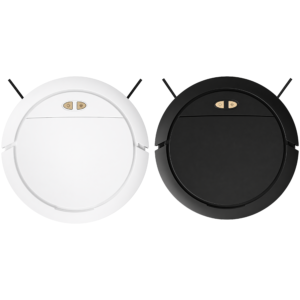
Featured model
UAHRC05 robot vacuum and flat mop
26W max · 0.5/0.9/1.8/2.7 kPa · ≈100/80/60min · 335ml dustbin · 100ml tank
From $56.20/unit at the 2,400-unit catalog tier
Similar products
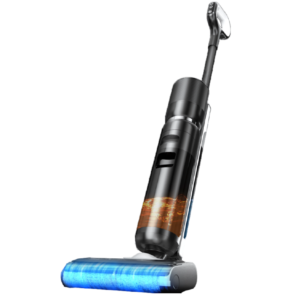
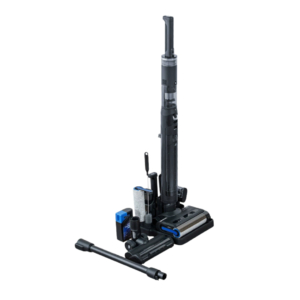
These live catalog pages show cordless vacuum-mop and floor-scrubber alternatives in the same floor-care range.
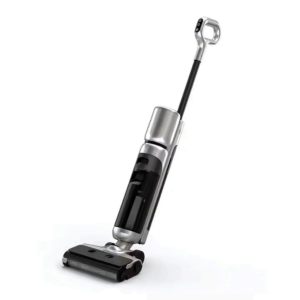
Aspiradora inalámbrica, 200W, 17000Pa, con función de fregado y lavado
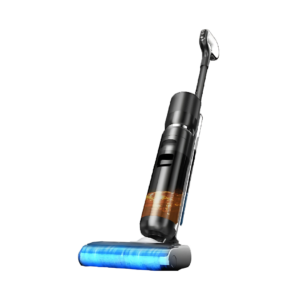
Odkurzacz na mokro i sucho, 200W, 16000Pa, zbiornik 800ml
Floor Scrubber, 200W, 14000Pa, Replaceable Battery
Ready to order or need a wholesale quote?
Vacuum Cleaners China manufactures these appliances direct from our Guilin, China factory — OEM, private-label and B2B welcome. Tell us your market, configuration and volume.