Robot Vacuum UAHRC01: What 2.7kPa and LiDAR Change
Robot Vacuum UAHRC01: What 2.7kPa and LiDAR Change
At the 10,000-unit catalog tier, UAHRC01 is $91.64 per unit; the costly decision is whether LiDAR mapping, 2.7kPa suction and a 240ml mop system support the retail promise. A robot vacuum is a battery-powered floor appliance that navigates without an operator, and this model sweeps, vacuums and flat-mops under Wi-Fi app control.
// 01 — Key takeaways
Guilin Use at Home Technology Co., LTD was founded in 2005 and operates seven production lines in a 15,000m² facility. See the documented company details in the Trust Center.
The highest of three listed suction values; the other catalog values are 0.9 and 1.2kPa.
Three listed working-time values from a 14.4V / 2600mAh battery.
Separate dustbin and electronic water-tank capacities for vacuuming and flat mopping.
Standard and custom catalog MOQs; customization scope belongs in the commercial brief.
// 02 — Shortlist
What should buyers decide before shortlisting UAHRC01?
Shortlist UAHRC01 when systematic laser-radar navigation, room controls and maintenance mopping matter more than an auto-empty base or a hand-guided wash head. The decision should connect the named floor types, debris, room layout, app handover and service plan to a repeatable acceptance method.
Which floor-care job fits this robot vacuum?
UAHRC01 suits routine sweeping, dry pickup and damp maintenance on compatible floors. Its 300ml dustbin and 240ml electronic water tank serve separate dry and wet tasks. The product record does not describe liquid pickup, a dirty-water tank or operator-applied scrubbing pressure.
Where does LiDAR mapping change the offer?
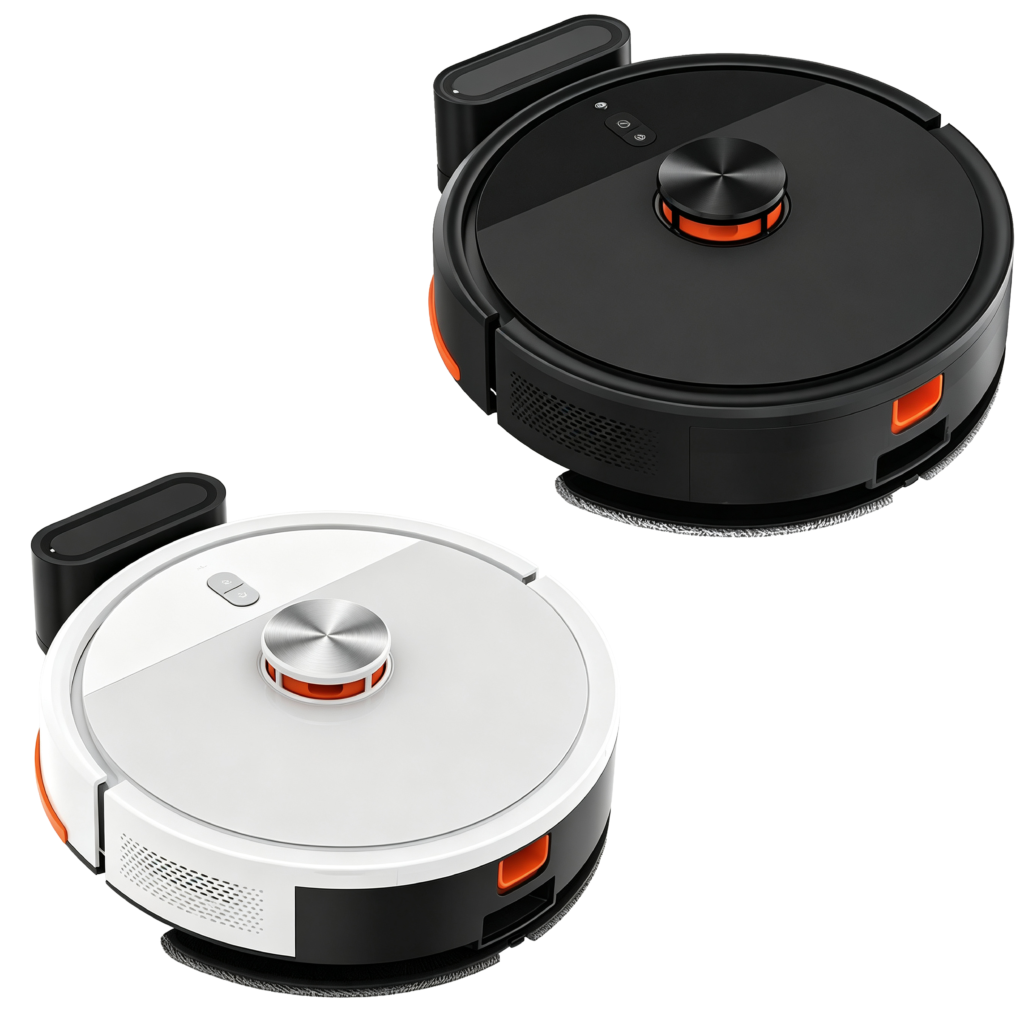
The catalog calls the navigation mode “laser radar mapping.” It also lists zone cleaning, spot cleaning, map editing, a virtual wall, breakpoint resume and return to charge. Those functions support a room-based proposition, but a layout trial must still show coverage around furniture, thresholds and reflective surfaces.
When is a different architecture more suitable?
Choose a hand-guided wet/dry washer when separated clean and dirty water, direct operator control or wet pickup defines the task. Choose another robot platform when the brief requires an auto-empty bin, a mop-washing dock, mop lifting, camera-based object recognition or another function absent from this record.
Navigation earns its place in a retail claim only when the route reaches the debris the cleaning head is meant to remove.
// 03 — Specifications
Which robot vacuum specifications drive the decision?
UAHRC01 combines a 50W brushless DC motor with three listed suction values, three working-time values, automatic recharge and a 306×298×83mm chassis. Buyers should read the complete system—navigation, brush contact, bin, filter state, battery, mop feed and app—not treat one pressure figure as the result.
UAHRC01 specification sheet
Rev. 2026.08
| Specification | UAHRC01 catalog value | Why it matters |
|---|---|---|
| Navigation | Laser radar mapping | Supports systematic routes and mapped app functions |
| Cleaning module | Sweep-suck-mop three-in-one | Combines routine dry pickup and flat mopping |
| Motor | High-speed DC brushless motor; maximum 50W | Defines the listed electrical ceiling |
| Suction | 0.9 / 1.2 / 2.7kPa | Three catalog pressure values |
| Battery | 14.4V / 2600mAh | Cordless energy source |
| Working time | Approximately 120 / 100 / 80 minutes | Three catalog elapsed-time values |
| Charging | DC 19V–1.2A; 4–6 hours | Adapter and turnaround requirement |
| Dustbin | 300ml | Dry-debris storage |
| Water tank | 240ml | Electronic feed for the flat mop |
| Noise | ≤70dB | Listed acoustic ceiling without a stated test distance |
| Product size | 306×298×83mm | Furniture clearance and turning envelope |
| Net weight | 2.45kg | Handling and returns reference |
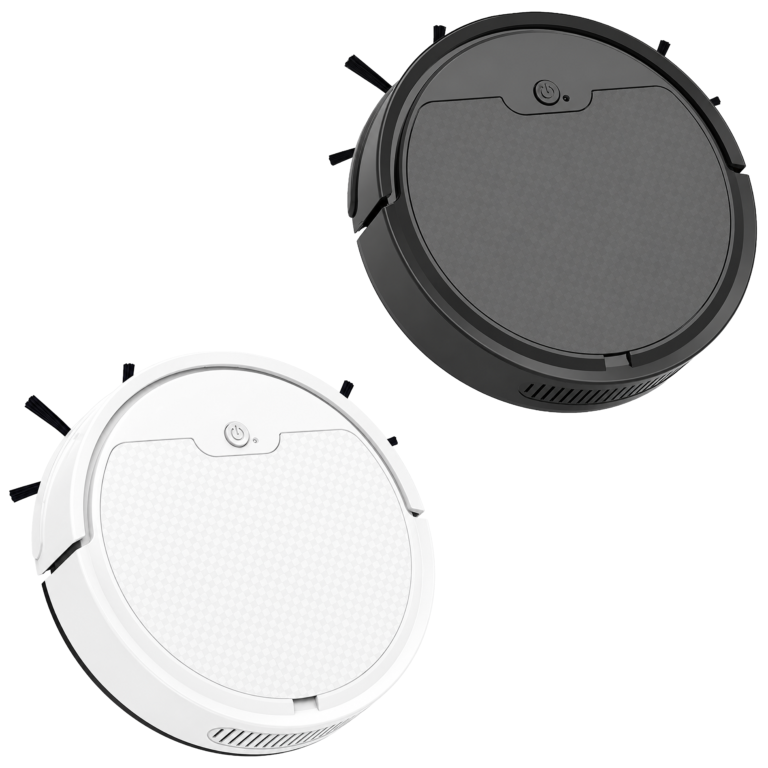
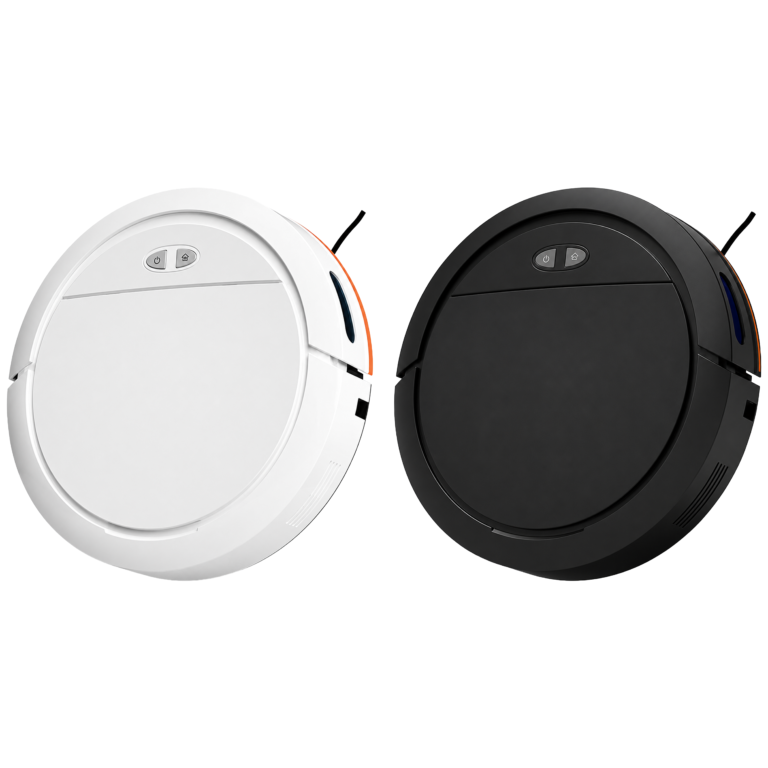
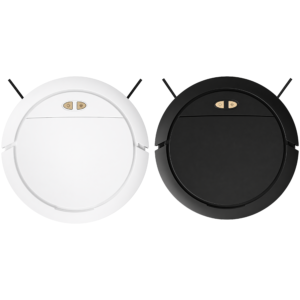
| Colors | White, Black | Two catalog finishes |
Catalog basis: Product, runtime, wet-system, packing, MOQ and pricing figures in this article come from the supplied catalog records, not independent laboratory or pack-out observations. The record does not map suction or working-time values to named modes; bind those relationships in the released specification before retail copy is printed.
How should buyers read the three runtime values?
The listed sequence is approximately 120, 100 and 80 minutes. Runtime describes elapsed operation, not cleaned area. Route length, repeated passes, floor drag, suction setting, mop use, battery state and interruptions all change the area completed, so a route trial should record both elapsed time and floor area.
Does 2.7kPa alone predict pickup?
No. Pressure is one input alongside airflow, inlet geometry, brush contact, travel speed, debris type, surface texture and filter loading. Compare UAHRC01 on the intended floor samples with fixed debris mass and pass count. Report the whole method with the result.
// 04 — Comparison
How does UAHRC01 compare with two fetched robot vacuums?
Three direct SKU records show different range positions. UAHRC01 leads with laser-radar mapping and the broadest listed app controls. UAHRC05 uses gyroscope-plus-pedometer navigation, while UAHRC07 uses pedometer planning and Bluetooth. Their catalog prices cannot be compared apart from quantity, function set and packing.
| Model | Navigation / control | Power / suction | Working time | Dust / water | Lowest listed tier |
|---|---|---|---|---|---|
| UAHRC01 | Laser radar mapping / Wi-Fi app | 50W max / 0.9, 1.2, 2.7kPa | ≈120 / 100 / 80min | 300ml / 240ml | $91.64 at 10,000 |
| UAHRC05 | Gyroscope + pedometer / Wi-Fi app | 26W max / 0.5, 0.9, 1.8, 2.7kPa | ≈100 / 80 / 60min | 335ml / 100ml | $56.20 at 2,400 |
| UAHRC07 | Pedometer planning / Bluetooth app | 8.6W / 1200Pa | ≈80min | 510ml / 135ml | $23.00 at 1,000 |
When does UAHRC01 justify its range position?
Its case rests on laser-radar mapping, map editing, virtual walls, zone and spot commands, carpet boost, breakpoint resume, automatic recharge, a 240ml electronic water tank and three listed suction levels. Those functions add value only when the distributor’s app, floor and service briefs use them.
When do UAHRC05 or UAHRC07 fit instead?
UAHRC05 fits a Wi-Fi proposition with gyroscope-plus-pedometer navigation. UAHRC07 fits a lower listed price position with Bluetooth control and a larger 510ml dustbin. Neither direct record names laser-radar mapping, map editing or a virtual wall.
// 05 — Evaluation
What acceptance protocol should a distributor run?
A useful acceptance plan separates route coverage, dry pickup, obstacle behavior, edge protection, docking and mopping. It fixes the floor, debris, furniture layout, battery state, bin load, mode and time window before the run. Each result then points to one system instead of one vague “cleaning” score.
How should LiDAR route coverage be measured?
Divide a representative room into marked zones. Log first visits, repeat passes, missed zones, trapping, recovery and elapsed time. Repeat after moving one chair and adding one low obstacle. Test map editing, a virtual wall, zone cleaning, spot cleaning, breakpoint resume and return to charge as separate commands.
How should dry pickup be measured?
Apply a weighed debris mix to each target surface, start with a clean filter and empty bin, then run a fixed mode and pass count. Weigh retained and remaining debris. The official IEC/ASTM 62885-7 page describes methods for measuring dry-cleaning robot performance, including debris, fibre and energy tests.
What does the IEC robot-vacuum standard establish?
IEC/ASTM 62885-7 applies to household dry-cleaning robots and defines measurement methods for characteristics that interest users. The IEC page explicitly says it is not a safety standard and does not set performance requirements. Cite the method used; do not turn the standard’s existence into a product result.
How should obstacle and anti-fall modules be assessed?
The catalog lists two obstacle-avoidance modules and three anti-fall modules. Use a contained rig with furniture legs, cables, thresholds and protected edges. Log contact, stop, reroute and recovery. A guarded edge trial protects people and equipment if the unit behaves outside the expected path.
// 06 — Connectivity
What belongs in the Wi-Fi app handover?
The app handover should name the delivered app, supported phone systems, pairing path, permissions, account behavior, update owner, data handling and recovery route. UAHRC01 lists Wi-Fi control and many app commands, but the catalog does not state operating-system versions, cloud location, retention periods or security support.
Which app functions are actually listed?
The record names remote on/off, schedules, zone and spot cleaning, cleaning modes, breakpoint resume, carpet boost, strong cleaning, return to charge, map editing and a virtual wall. Exercise each named command on a fresh phone and after a router or phone restart.
Which connected-device questions belong in procurement?
Ask how the device is identified, configured, updated, protected and reported when its cybersecurity state changes. NISTIR 8259A gives manufacturers, integrators and buyers a core IoT cybersecurity-capability baseline. It is a procurement reference, not evidence that this model implements every capability.
// 07 — Mopping
Can the 240ml electronic tank support the mop claim?
The 240ml electronic water tank supports a flat cloth for damp maintenance, not a claim of liquid extraction or separated-water washing. The buyer brief should name permitted floor finishes, cloth preparation, water setting, route area, visible streak limit and acceptable residual moisture after a defined drying interval.
Which floors belong in the wet trial?
Use the finishes named in the target market’s instructions, including seams and edges that represent real installations. Exclude unsealed or moisture-sensitive surfaces unless their maker permits damp wiping. Record start water, remaining water, traveled area, standing droplets, streaks and finish change after drying.
What is absent from the wet-system record?
No water-flow rate, stain-removal result, mop pressure, mop-lift function, dirty-water tank or self-washing dock is listed. Those gaps set the claim boundary. They do not erase the supplied flat-mop function; they define what the distributor must not add to the carton.
// 08 — Logistics
What do the carton figures mean for import planning?
UAHRC01 packs four units in a 575×357×430mm master carton with 16.3kg gross weight and 0.08826825m³ listed volume. The record also lists 1,244 units for 20ft, 2,580 for 40ft and 3,028 for 40HQ. These values describe the standard pack only.
UAHRC01 catalog packing record
4 units / carton
| Packing field | Catalog value | Planning use |
|---|---|---|
| Unit net / gross weight | 2.45kg / 3.6kg | Handling and parcel reference |
| Product size | 306×298×83mm | Clearance and shelf planning |
| Unit package | 344.5×140×414mm | Artwork and retail-carton envelope |
| Master carton | 575×357×430mm | Warehouse and pallet input |
| Carton quantity | 4 units | Case ordering and inspection count |
| Carton gross weight | 16.3kg | Freight and handling input |
| Carton volume | 0.08826825m³ | Initial cubic-volume input |
| 20ft / 40ft / 40HQ | 1,244 / 2,580 / 3,028 units | Published container references |
Which accessories must appear in receiving inspection?
The standard bill lists one main unit, one brush, one cleaning cloth, one manual, one charging dock, one cleaning tool and one adapter per product. Inspection should reconcile those seven line items with the released manual language, color allocation and packing artwork.
When should the loading plan be recalculated?
Recalculate after any change to the unit box, inner protection, case quantity or master-carton dimensions. A private-label carton can alter cube before the robot changes. Use the final packing drawing for pallet count, container use and landed logistics rather than carrying the standard figures into a changed pack.
// 09 — Commercials
How do the price tiers and MOQs shape a quote?
UAHRC01 lists $93.64 at 50 units, $92.64 at 1,000, $92.14 at 3,000 and $91.64 at 10,000. The standard MOQ is 200 units and the custom MOQ is 1,000. Quantity, customization, compliance scope, packaging and delivery terms must share one quote version.
| Listed quantity | Listed discount | Catalog unit price | Relation to MOQ |
|---|---|---|---|
| 50 | $0.00 | $93.64 | Below the 200-unit standard MOQ |
| 1,000 | $1.00 | $92.64 | Matches the custom MOQ |
| 3,000 | $1.50 | $92.14 | Bulk catalog tier |
| 10,000 | $2.00 | $91.64 | Lowest listed catalog tier |
What does the 50-unit price row mean?
It is a catalog tier, while the same product record sets the standard MOQ at 200 units. The record supplies no 200-unit price. A quote therefore needs an explicit unit price at the accepted order quantity instead of treating the 50-unit display row as order authorization.
Who should shortlist UAHRC01?
Distributors can use its mapped controls to build a room-oriented robot range. Private-label buyers can start commercial planning from the 1,000-unit custom MOQ. Hotels and managed accommodation should first test docking access, guest-room obstacles, network policy, floor mix, staff reset time and consumable handling.
Which open commercial fields belong in the quote?
Name the Incoterm, loading point, lead time, payment schedule, currency, price validity, destination plug, manual languages, app ownership, spare-parts list, inspection plan and warranty route. The product record does not publish values for those fields. For EU programs, the European Commission’s RoHS page explains restrictions applying broadly to electrical and electronic equipment.
// 10 — Manufacturing
How we manufacture and release a UAHRC01 order
The documented UAHRC01 factory scope covers assembly, line testing and packing against the released order file. Tooling controls, PCBA burn-in records, rework traceability and detailed station checks should be treated as buyer-requested controls unless the order is supported by records that make those steps part of the agreed release plan.
Assembly against the released order file
The documented factory scope includes assembly. The released file should identify the UAHRC01 configuration, white or black finish, adapter, app requirement, artwork and standard accessory bill so production works from one buyer-defined version.
Buyer-requested tooling and electronics controls
If a program requires private-mould identification, first-off tooling reports, PCBA burn-in logs or rework traceability, write those controls and their evidence into the signed quality agreement. The current catalog record does not establish them as standard UAHRC01 production steps.
Line testing with an agreed quality-control plan
The documented scope includes line testing. The buyer’s quality-control plan should name the functions, test conditions, acceptance limits, sampling level and record format; detailed startup, mapping, obstacle, docking, charging or app checks become commitments only when that plan includes them.
Packing and order release
The documented scope includes packing. Reconcile the main unit, brush, cleaning cloth, manual, charging dock, cleaning tool and adapter with the released bill, then use the agreed carton artwork and destination requirements as the order-release basis.
// 11 — Questions
Frequently asked robot vacuum questions
These answers address recurring buyer questions about LiDAR, suction, runtime, combined mopping, Wi-Fi and wholesale quantities. Each answer stays within the supplied UAHRC01 record and the evaluation plan above, so a distributor can turn common search questions into accurate sales and procurement language.
Is LiDAR navigation worth it on a robot vacuum?
LiDAR is useful when mapped rooms, zones, virtual boundaries and systematic routing support the user’s task. UAHRC01 lists laser-radar mapping, zone and spot cleaning, map editing and a virtual wall. Its value should be judged by route coverage, recovery and docking in the target layout.
How much suction power is enough for a robot vacuum?
No single pressure threshold guarantees pickup because airflow, inlet shape, brush contact, filter loading, speed, floor and debris also matter. UAHRC01 lists 0.9, 1.2 and 2.7kPa. A fixed debris-and-surface method shows whether those settings support the intended retail claim.
How long does the UAHRC01 robot vacuum run?
UAHRC01 lists approximately 120, 100 and 80 minutes from a 14.4V / 2600mAh battery. Use elapsed time as one planning input, then record completed rooms and area during the defined route trial. Floor drag, suction level, mop use, interruptions and battery condition influence how much floor the robot covers.
What wet-cleaning function does UAHRC01 provide?
UAHRC01 uses a 240ml electronic water tank to feed a flat mop for routine damp maintenance on compatible hard-floor finishes. The buyer trial should set the water level, cloth preparation, route area and drying interval, then record visible streaks and standing droplets. Follow the floor maker’s care instructions.
Does the UAHRC01 robot vacuum work without Wi-Fi?
The product record lists mobile-app Wi-Fi control and names its remote functions, but it does not describe offline controls, router requirements, account behavior or cloud dependence. Those points need a delivered app handover. Retail copy should not promise offline operation from the supplied record alone.
What are the UAHRC01 MOQ and catalog price tiers?
UAHRC01 has a standard MOQ of 200 units and a custom MOQ of 1,000. The supplied price schedule lists $93.64 at 50 units, $92.64 at 1,000, $92.14 at 3,000 and $91.64 at 10,000. Use the applicable quantity, customization scope, packing and delivery terms as the quote inputs.
// 12 — Conclusion
Is UAHRC01 the right robot vacuum for your range?
UAHRC01 belongs on a distributor shortlist when laser-radar mapping, mapped Wi-Fi controls, automatic recharge, 2.7kPa maximum listed suction and a 240ml electronic mop tank match the target floor-care job. The next decision is a controlled route, pickup, docking, app and damp-maintenance evaluation using the intended rooms and floor finishes.
Featured model
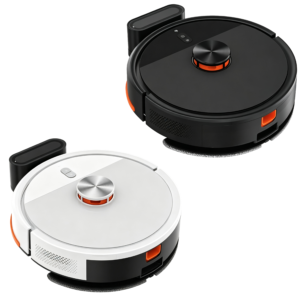
UAHRC01 LiDAR robot vacuum and flat mop
50W max · 0.9/1.2/2.7kPa · ≈120/100/80 minutes · 300ml dust · 240ml water
From $91.64/unit at the 10,000-unit catalog tier
Similar products
These five live catalog pages show other robot and wet/dry floor-care configurations.
Вертикальный пылесос, 250W, 18000Pa, LED-дисплей
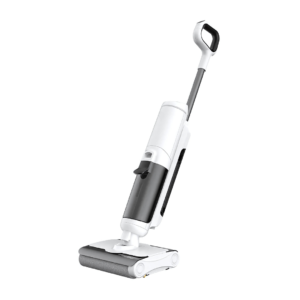
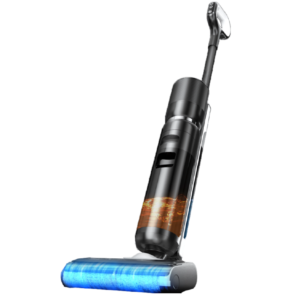
Islak Kuru Elektrikli Süpürge, 250W, 16000Pa, Çift Silindir Fırça
Ready to order or need a wholesale quote?
Vacuum Cleaners China manufactures these appliances direct from our Guilin, China factory — OEM, private-label and B2B welcome. Tell us your market and volume.